
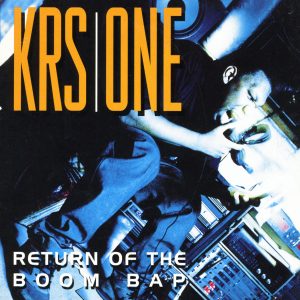
When I shot Return of the Boom Bap, I didn’t realize it would become one of the defining moments of my career. It was my first official album cover — and what a way to come out the gate: KRS-One, in his prime, creating a new chapter in hip-hop.
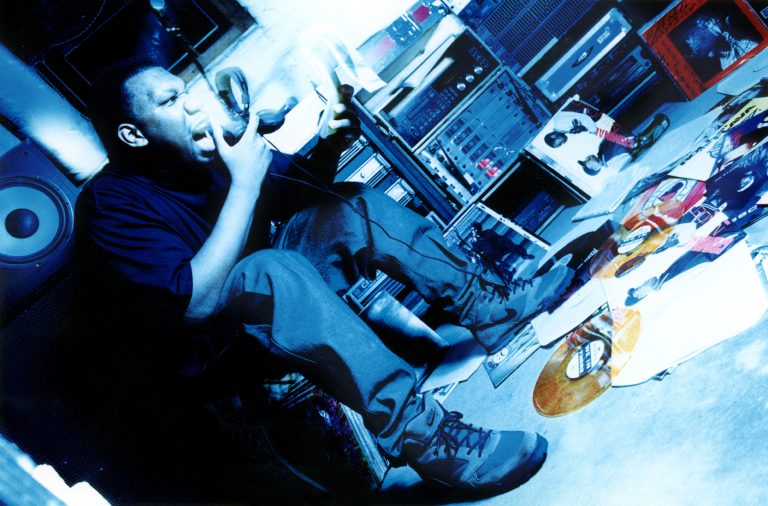
This was 1993. Film was king. There was no digital, no retouching, no safety net. I loaded a roll of 64T tungsten-balanced reversal film, knowing it would give me something different. After the shoot, I cross-processed it in C-41, and that decision created the deep, electric blue tones that became the signature of the cover. That look wasn’t an effect — it was chemistry, instinct, and experimentation.
Inside the studio, KRS wasn’t posing for me. He was rhyming — full volume, full emotion, headphones on, body moving. I hit him with a strobe to freeze the moment, but kept my shutter slow enough to let the motion blur reveal the energy in his performance. That slight streak around his head? That’s not an accident. That’s what his voice looked like.
The environment was pure early-90s authenticity: vinyl crates, cables, gear everywhere, the analog heartbeat of hip-hop culture. I tilted the camera just enough to give the frame momentum — like the whole room was moving with the beat.
The photoshoot that day was a full adventure. We started at the house where I shot the album cover, dialing in that raw Boom Bap energy. Then KRS was like, “Let’s hit the train tracks in the Bronx for the publicity shots.” And 23-year-old me? Man, I didn’t even blink. Train tracks? LET’S GO. Zero hesitation. And these weren’t some abandoned, safe little movie-set tracks—nah. These were the Metro North tracks… trains flying through at 80 MPH, and that live third rail sitting there ready to fry you instantly. Today’s Danny wouldn’t even consider stepping foot in there—but back then, you’re young, you’re fearless, and you live it once.
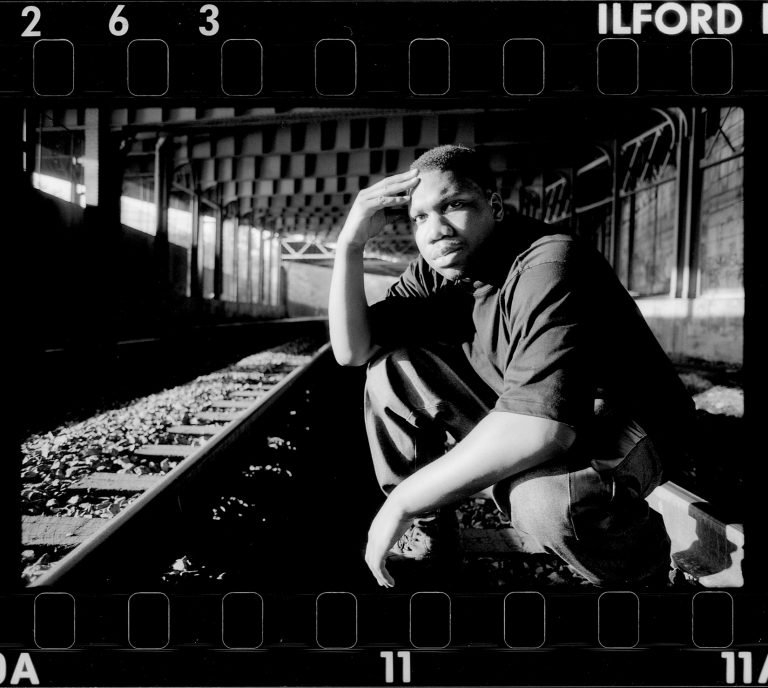
But damn… look at that shot. The sun was dropping, and it started creeping between the wall and the ceiling of the West Side Highway above us, carving out this razor-thin beam of light. As soon as I saw it, I started hunting for that perfect Rembrandt triangle on his face—one of the most classic portrait lighting patterns. The train tracks converging into infinity, KRS with his hand on his face, deep and pensive… everything aligned. A dangerous location, a perfect moment, and the kind of image you can’t plan—you just have to be there, ready to catch lightning.
Nothing about this cover was staged. Nothing was safe or polished.Looking back, this shoot set the tone for everything that came after. It opened the door to over 150 album covers in my career, but this one will always be special. It’s the moment where my visual language met hip-hop’s rhythm, and together we created something timeless.