BX to the Fullest: The Day I Met Joey Crack
In 1993, the Bronx was vibrating at a different frequency. If you turned on Video Music Box, you couldn’t escape it: a raw, booming voice delivering a relentless flow over a baseline that shook your car windows. “Flow Joe” was popping all over the streets, and a 23-year-old kid named Fat Joe was rapidly making a name for himself. He was young, dynamic, and possessed an undeniable energy—the kind of presence that told you, right away, that he meant business.
At the time, I was helping out a friend who was launching a new magazine. She wanted to feature Joe, and since I was already incredibly familiar with his music, we packed up and headed straight to the BX.
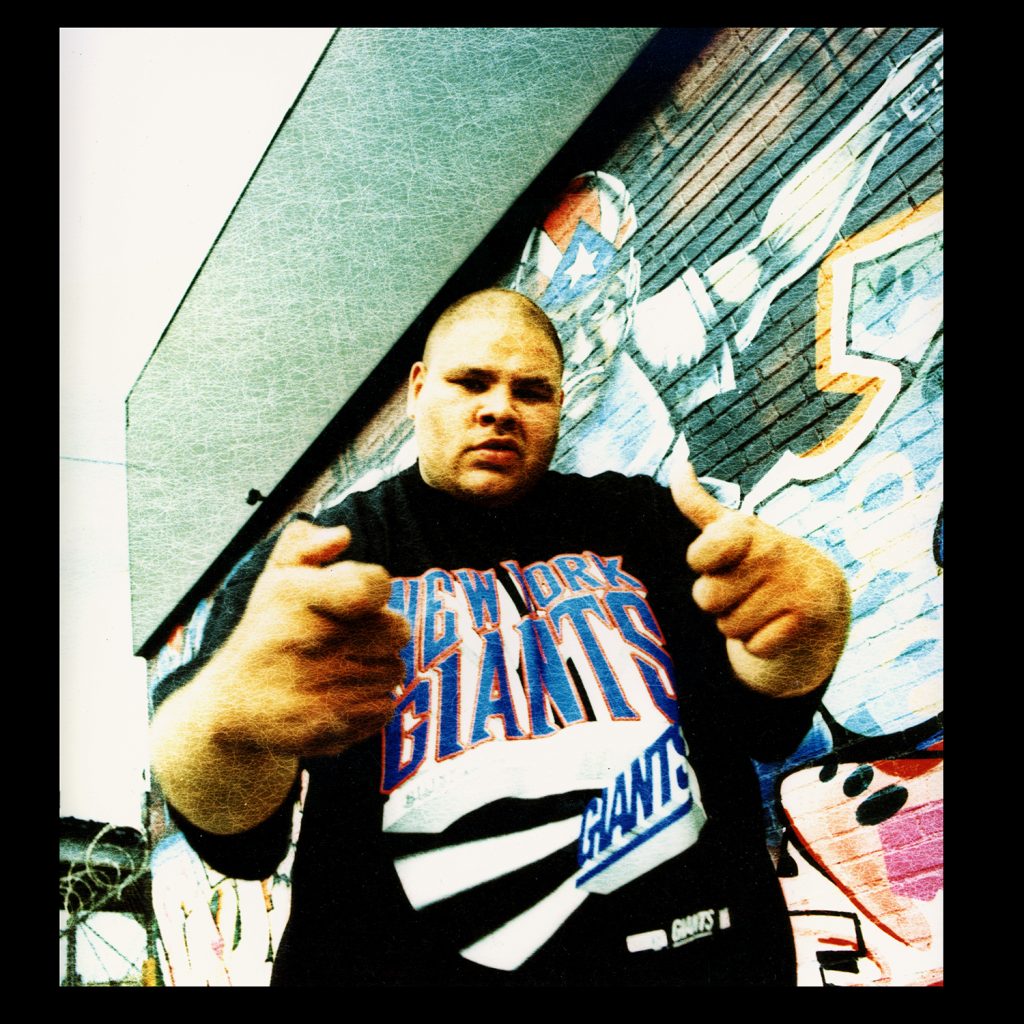
When we met up, Joe told me straight up how much he loved graffiti. He wanted the visual backdrop of the shoot to reflect the culture he came from, specifically requesting to shoot in front of a memorial piece painted by the legendary Tats Cru. We scouted a couple of walls, navigating the concrete landscape of the neighborhood until we found the perfect spot under the shadow of the elevated train.
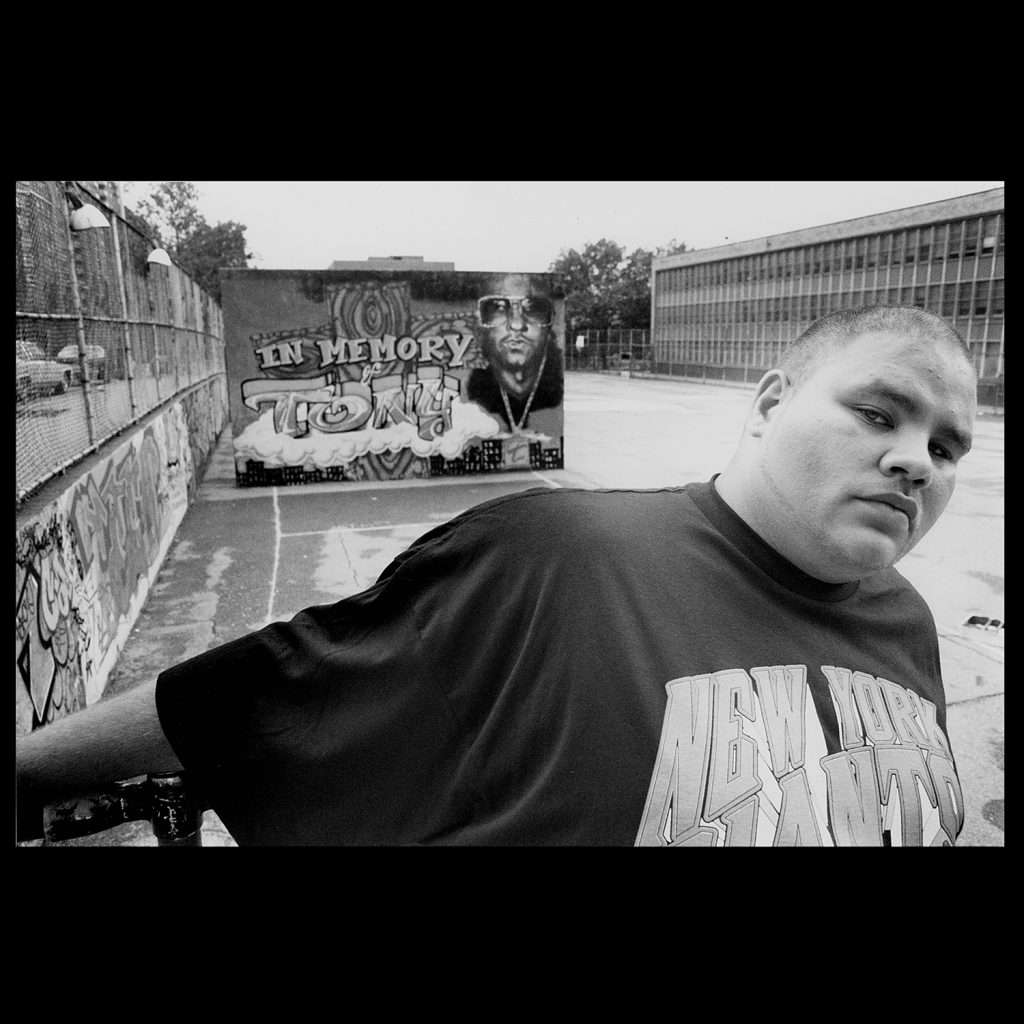
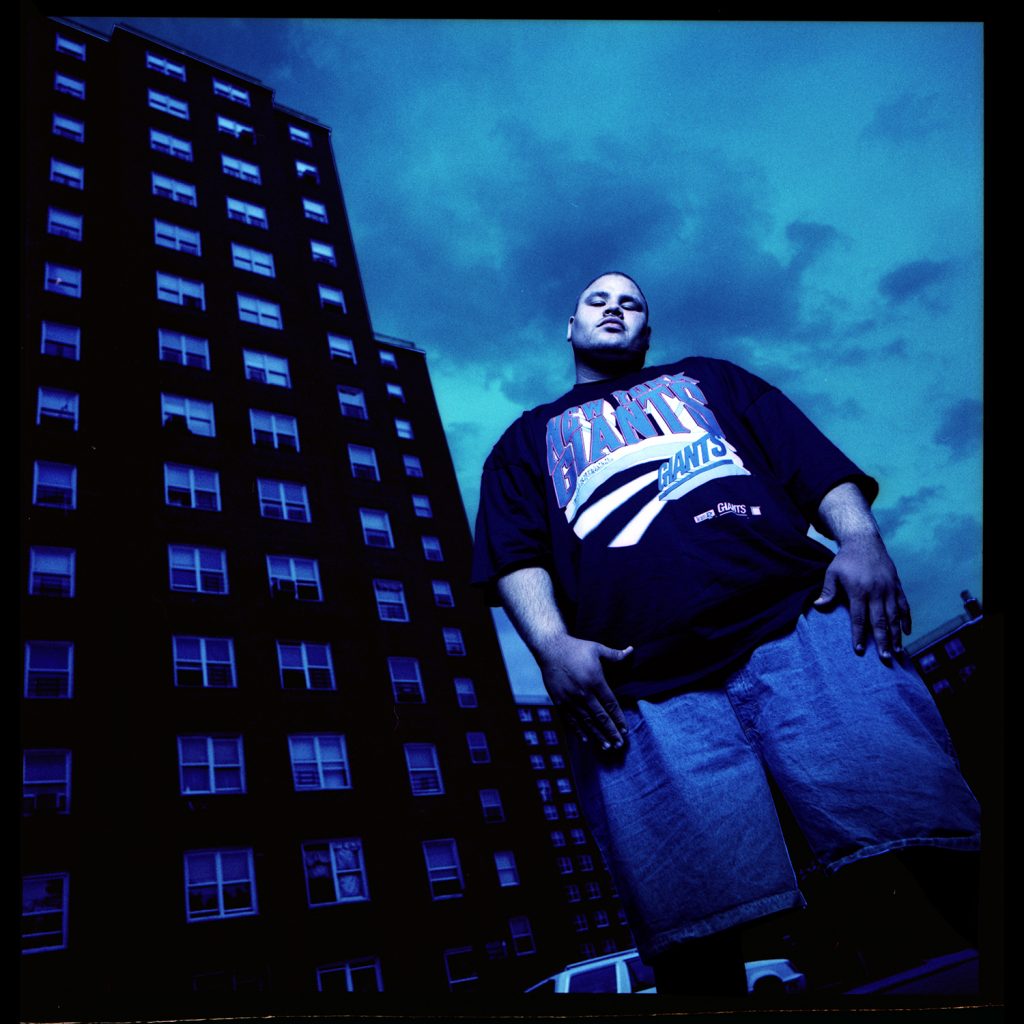
From a technical standpoint, I knew I needed to capture Joe’s essence—he was already a larger-than-life character, and the photography needed to amplify that reality. I pulled out my Hasselblad and leaned heavily on my $28\text{mm}$ and $50\text{mm}$ lenses. Getting down low into a worm’s-eye view, I framed Joe against the looming brick walls, the vibrant graffiti, and the towering New York public housing architecture. The wide glass distorted the perspective just enough to make him look absolutely monumental, a king standing over his block in a New York Giants tee.
But looking back, the day holds an even deeper layer of hip-hop history.
During the shoot, a crew of guys rolled up to the wall to say what’s up to Joe. It was a young, raw incarnation of the Terror Squad. Among them, one teenager immediately caught my eye. He was bigger than everyone else in the circle, carrying an intense, quiet gravity.
Impressed by his sheer physical presence, I looked over at Joe Fatal and Camille Evans, who were holding it down at the shoot, and asked, “Who is that?”
They nodded and confirmed what my gut already suspected: “That’s a rapper Joe is working with.”
That kid was Big Pun.
I didn’t officially get to photograph Pun until years later when we shot the iconic cover for Capital Punishment, but that afternoon in ’93 was the exact moment our paths first crossed. It was a snapshot of a dynasty in its infancy, a moment of pure, unscripted Bronx history captured on medium format film.
Seeing these frames today—the passing trains, the spray-painted walls, and a young Joey Crack looking directly into my lens—reminds me why we archive these moments. It wasn’t just a photo shoot. It was BX to the fullest.
How does this tone feel for your website? We can adjust the focus if you want to highlight more of the darkroom/film processing side, or keep the spotlight entirely on the street story.