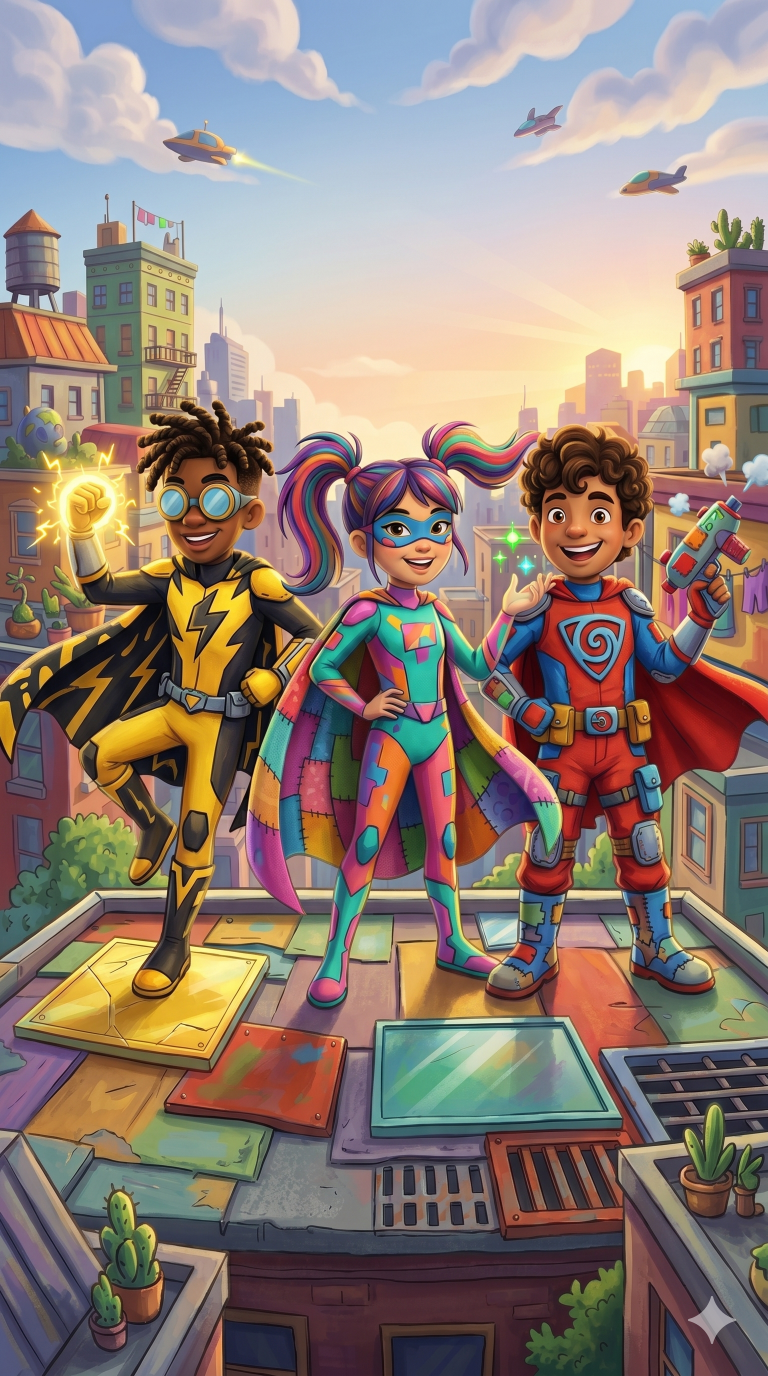
If you can imagine it, Ai can bring it to life
The AI Creative Lab is a premier digital arts curriculum designed to empower the next generation of storytellers by merging human creativity with the cutting edge of Generative AI. I provide a comprehensive, 31-week production experience where students transform from writers to directors, using specialized storyboarding and questionnaires to architect original heroes, deep backstories, and immersive worlds. My services include hands-on instruction in high-level AI tools—including Midjourney, Suno, and Veo2—to produce professional-grade character posters, original anthems, and cinematic trailers. By operating as a professional “Writer’s Room” and conducting all technical execution live on a shared cinema screen, I ensure a collaborative, safe, and transparent environment that focuses on narrative mastery while delivering a high-fidelity digital portfolio for every student. Scroll below to review the 3 Session (31 weeks) breakdown.
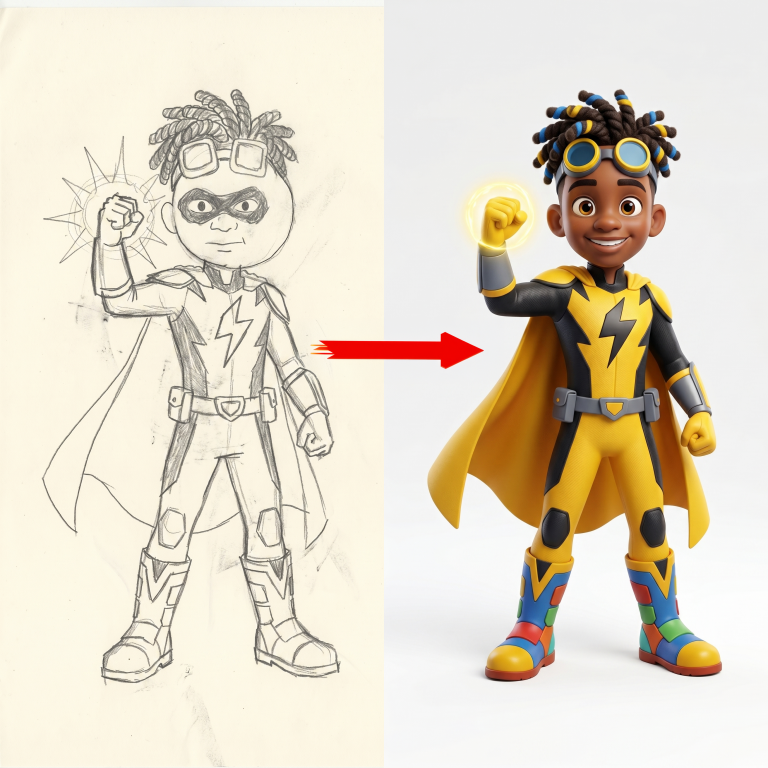
Session 1: The Architect (The 10-Week Roadmap)
- Week 1: The Concept. Introduction to “The AI Creative Lab.” Hand out the Hero Profiles. Students brainstorm their names, powers, and backstories.
- Week 2: World Building. Focusing on the environment. Where does the hero live? They write descriptions of the cities, hidden bases, or alien planets.
- Week 3: Visual Language. You teach them about color theory and lighting. Why does a hero wear red? Why is the villain’s lair dark green? They finalize the “Look” on their profiles.
- Weeks 4–7: The Forge (The Rotation). This is the “Hot Seat” phase.
- At the Computer: 2–3 students per week get their dedicated time with you to generate their Official Hero Portrait.
- At the Desks: The other students are creating “Concept Art” (drawing or collaging) for their gear and logos.
- Week 8: The Archnemesis. Now that the heroes exist, they repeat the process to create the villain. This creates “Conflict” and story.
- Week 9: The World Reveal. Using the computer to generate the “Environment” (the base or city).
- Week 10: The Portfolio Review. Each student puts their Hero, Villain, and World images together.
The “Grand Finale” of Session 1
To make them feel like pros, the end of Week 10 should result in a Character Trading Card or a Mini-Poster.
Session 2: The Producer (10-Week Roadmap)
Phase 1: The Sonic Identity (Weeks 1-3)
- Week 1: Music Theory for Heroes. We analyze famous themes (Star Wars, Avengers, Into the Spider-Verse). What does “Heroic” sound like? What does “Villainous” sound like? Students choose 3 “Vibe Keywords” for their hero.
- Week 2: Genre Exploration. Using the computer on the big screen, we experiment with Suno to hear the same prompt in 5 different genres (Jazz, Heavy Metal, Lo-Fi, Trap, Cinematic). Students lock in their hero’s “Sound.”
- Week 3: The Mood Board. Students create a “Playlist” or a list of instruments they want to hear (e.g., “Heavy bass, electric violins, and tribal drums”).
Phase 2: The Songwriter’s Room (Weeks 4-6)
- Week 4: The Hook. Every hero needs a tagline. Students write a 2-line “Hook” or chorus that defines their hero’s mission.
- Week 5: Verse & Story. Working at their desks, students write the “Story” of their song. We use Gemini/ChatGPT as a co-writer to help them find rhymes and rhythm.
- Week 6: The Lyrics Final. Students finalize a 15–30 second “Lyrical Script” for their anthem.
Phase 3: The Recording Studio (Weeks 7-9)
- Week 7 & 8: The Hot Seat (Rotations). * At the Workstation: 5 students per week come to the big screen. We input their lyrics and genre tags into Suno. The class acts as “Record Executives,” giving feedback on the AI’s “vocal performance.”
- At the Desks: The other students are designing the Single Cover Art for their song.
- Week 9: Remix & Refine. We take the best generations and “extend” them or tweak the prompts to get the perfect ending.
Phase 4: The Listening Party (Week 10)
- Week 10: The Single Release. We play every student’s anthem on the big speakers. Students present their Single Cover while their track plays. We celebrate the completion of the “Hero’s Voice.”
Session 3: The Director (11-Week Roadmap)
Phase 1: The Director’s Vision (Weeks 1-3)
- Week 1: Visual Storytelling. We analyze 15-second movie teasers. Students learn about “The Money Shot”—the one big moment where their hero reveals their power.
- Week 2: Storyboarding. At their desks, students draw 3 key frames: The Setup, The Action, and The Reveal. * Week 3: Motion Language. “Camera Prompts.” What is a Pan? What is a Zoom? What is a Slow-Motion shot? They add these terms to their storyboards.
Phase 2: The Digital Backlot (Weeks 4-8)
- Week 4 & 5: Animating the Poster (Runway). * Hot Seat: Use Runway to add subtle motion (hair blowing, glowing eyes) to the posters created in Session 1.
- Desks: Students work on “Dialogue”—writing a one-liner for their hero to say (or appear as text) in the trailer.
- Week 6, 7 & 8: The Power Reveal (Veo2).
- Hot Seat: Student use Veo2 to generate a high-fidelity clip of the hero using their power (e.g., “The hero blasts fire from their hands in a rainy alley”).
- Desks: Students act as “Editors,” choosing which parts of their Session 2 Anthem will play during which part of the video.
Phase 3: Post-Production & Editing (Weeks 9-10)
- Week 9: The Final Cut. On the big screen, you show them how to “layer” the elements. You combine the Video (Veo2), the Music (Suno), and the Character (Session 1) into a single 15-second file.
- Week 10: Titles & Graphics. We add the “Title Card” with the hero’s name and the student’s “Directed by” credit.
Phase 4: The NVISION Junior Premiere (Week 11)
- Week 11: The Red Carpet. A celebration of the full year. We dim the lights, grab some popcorn, and run the “Mini-NVISION” festival on the large screen. Every student presents their 15-second “Origin Teaser” to the class.