
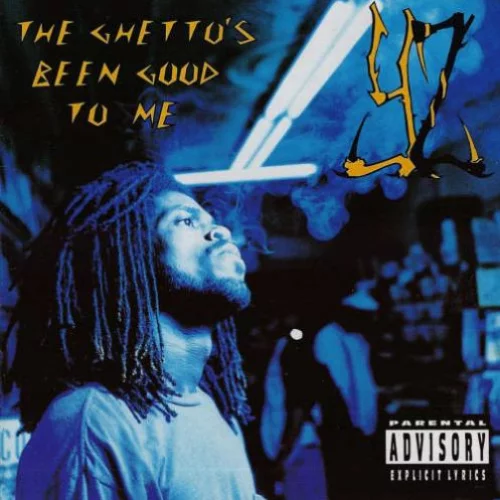
The Ghetto’s Been Good to Me: A Legacy of Ambition and Brotherhood
The summer of 1993 in Brooklyn wasn’t defined by the heat, but by a specific shade of gray—the kind of overcast sky that softens the city’s hard edges and makes colors pop against the concrete. It was just another day of hanging out, surrounded by the people I loved, doing exactly what I was born to do: capturing life through a lens.
At the time, the mainstream media was obsessed with a singular narrative of the inner city. They focused on the violence, the sirens, and the “poison” that seeped into our neighborhoods. But when you’re actually in it, you see the truth that the cameras usually miss. You see the honor. You see the life. You see the ambition. My collaboration with the rapper YZ for his album, The Ghetto’s Been Good to Me, was born from that reality. The title wasn’t ironic; it was a testament to the fact that even in humble beginnings, you can find the love and creativity necessary to build something monumental.
The Philosophy of “My Brother’s Keeper”
Working with YZ was a turning point for me, not just as a photographer, but as a man. It was the first time I encountered the philosophy of “My Brother’s Keeper.” That was the name of YZ’s management company, and he lived by the “Each One, Teach One” creed. He wasn’t just moving like an artist; he was moving like a builder. He was intentional about pulling others up as he climbed, rejecting the “crabs in a bucket” mentality that so often plagues competitive industries.
It was through this ecosystem that I was introduced to a young, incredible talent who just used to “chill” in YZ’s living room: Yasiin Bey, then known as Mos Def. We became fast friends. In fact, if you look closely at the music video for “The Ghetto’s Been Good to Me”—which was my first gig as a Director of Photography on 16mm film—you’ll see Mos Def right there. Through that circle, I also met his brother Medina Green and their sister Ces, who together formed the group UTD (Urban Thermo Dynamics). Later on I got to direct their first music video “Manifest Destiny”.
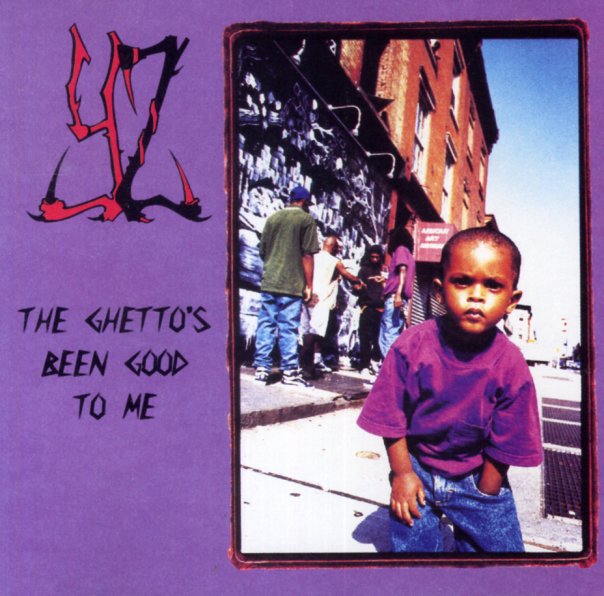
A Piece of Hip-Hop History: The Kid on the Block
There is a specific piece of history within the The Ghetto’s Been Good to Me cover that I hold dear. It was the first time I photographed a child for an album cover—that little boy standing defiantly on the block is actually YZ’s son.
The art director for this project was the legendary Cey Adams. Cey, of course, went on to art direct some of the most iconic imagery in music history, including the cover for Biggie Smalls’ Ready to Die. While the world rightfully celebrates the image of the infant on Biggie’s masterpiece, I always like to share the “fun fact” that we were exploring that visual language of innocence amidst the urban landscape a year prior. We were showing the world that the “ghetto” wasn’t just a place of struggle; it was a place where we raised our families, nurtured our sons, and planted the seeds for the future.
We didn’t have money back then, but we had our lives, our honor, and an outlet to express exactly how we felt. Looking back at these images now, I don’t just see a rapper and a Brooklyn street—I see the moment we decided to make something positive out of every negative situation. We weren’t just taking pictures; we were documenting the beginning of a legacy.
The Birth of CARTEL and ARTE
YZ’s movement mirrored what I was trying to build with my own creative community, a coalition we called CARTEL. We focused on the heart of that word—the “ARTE” tucked between the ‘C’ and the ‘L’. We were a group of Black and Latino creatives who realized that if we were starting to see success, we had a responsibility to bring our community with us. We were often given the “bad end of the stick” in professional circles, so we created our own stick. We traded the philosophy of competition for the philosophy of the collective.
#yz #dannyhastings #hiphop #theghettosbeengoodtome #returnofthehollyone #mosdef #brooklyn #goldenera #hiphop